
Surf Tips for Beginners: How to Catch Your First Wave
The right board, the right wave and a few habits that make your first week of surfing fun instead of frustrating. Ten tips from a surf camp that teaches beginners every day.
Everyone remembers their first wave. Fewer people remember the forty they fell off before it. Most of those falls have nothing to do with talent or fitness. They come from the wrong board, the wrong wave, or a habit nobody pointed out.
These ten tips are the ones that make the biggest difference in a first week. We teach beginners on the beaches around Tamraght every day, so this is the short version of what we tell them before they paddle out.
1. Start on a big, soft board
A long, high-volume soft-top floats you higher, paddles faster and stays stable when you stand up. It also hurts a lot less when it hits you. Small boards look better and work worse until you can already ride. Every surf package with us includes a soft-top, and your coach will move you to something smaller when you're ready.
2. Learn in the whitewater on a sandy beach
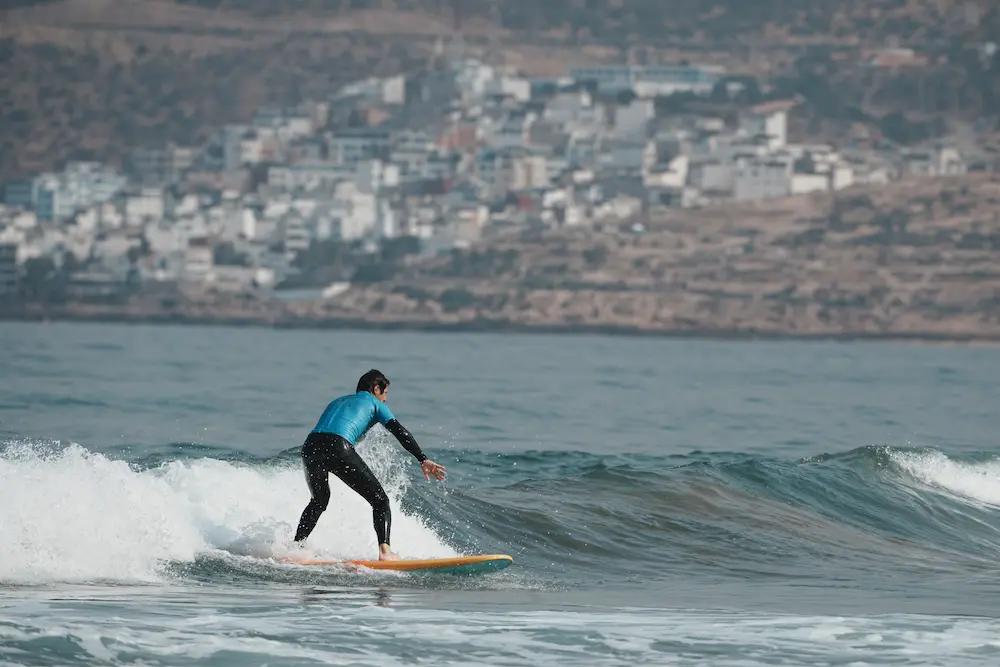
Your first sessions belong in the broken, white part of the wave, close to shore, on a sandy bottom. It's where you learn to pop up without also trying to read a wave face. Around Tamraght that means beaches like Devil's Rock, Banana Beach and Croco Beach. Green waves come next, usually once you can stand up in the whitewater most of the time.
3. Practise the pop-up on the sand first
The pop-up is the move from lying on the board to standing on it, in one motion. Do it twenty times on the beach before you get wet: hands under your chest, push, bring your back foot in, then your front foot between your hands. It feels silly. It also saves you a lot of falls, because the ocean is a bad place to learn a new movement.
4. Paddle two strokes longer than you think
The most common beginner miss: you feel the wave lift the board, you stop paddling, and the wave rolls on without you. Keep paddling until you feel the board start to slide forward on its own, then give it two more strokes. Only then pop up.
5. Look where you want to go
Your board follows your eyes. Look down at your feet and you'll fall off the front. Look towards the beach, or along the wave once you start turning, and your body lines up behind it. Keep your knees bent and your weight low; standing up straight is how most rides end early.
6. Learn the line-up rules early
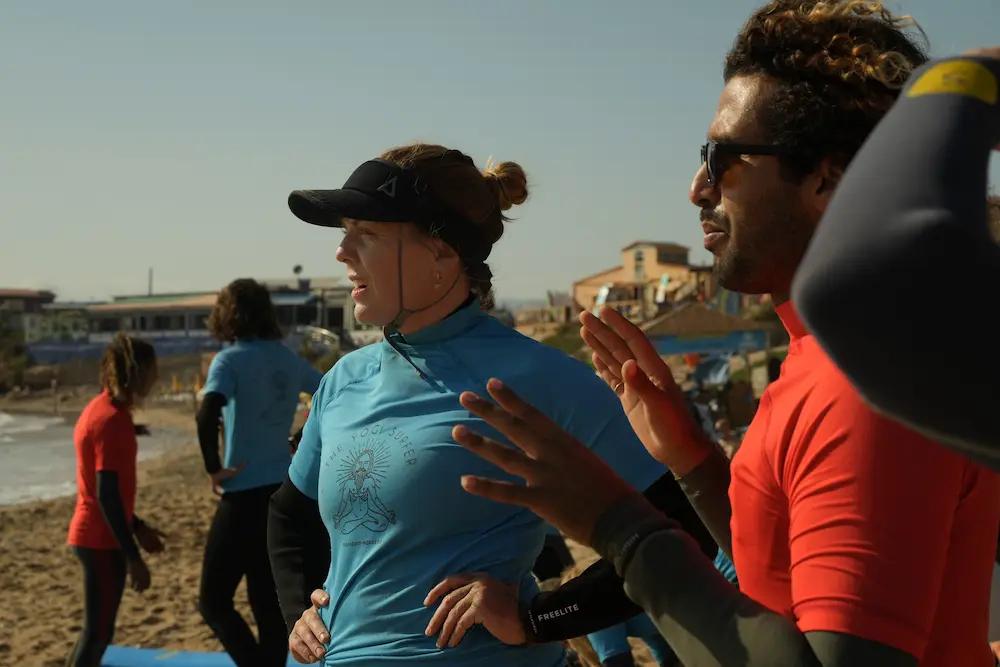
The surfer closest to where the wave is breaking has priority. If someone is already riding a wave, don't paddle into it in front of them. That's called dropping in, and it's the quickest way to upset a line-up. As a beginner, the easiest rule is to stay in the whitewater, away from people surfing green waves, and to keep hold of your board so it can't fly into anyone.
7. Respect the ocean
Surf with other people, never alone, and ask your coach about the currents before you go in. If you feel pulled away from the beach, don't fight it head on: paddle sideways, parallel to the shore, until you're out of the pull, then come in. Your board floats, so stay with it. When in doubt, sit on the beach and watch for ten minutes first.
8. Pace yourself
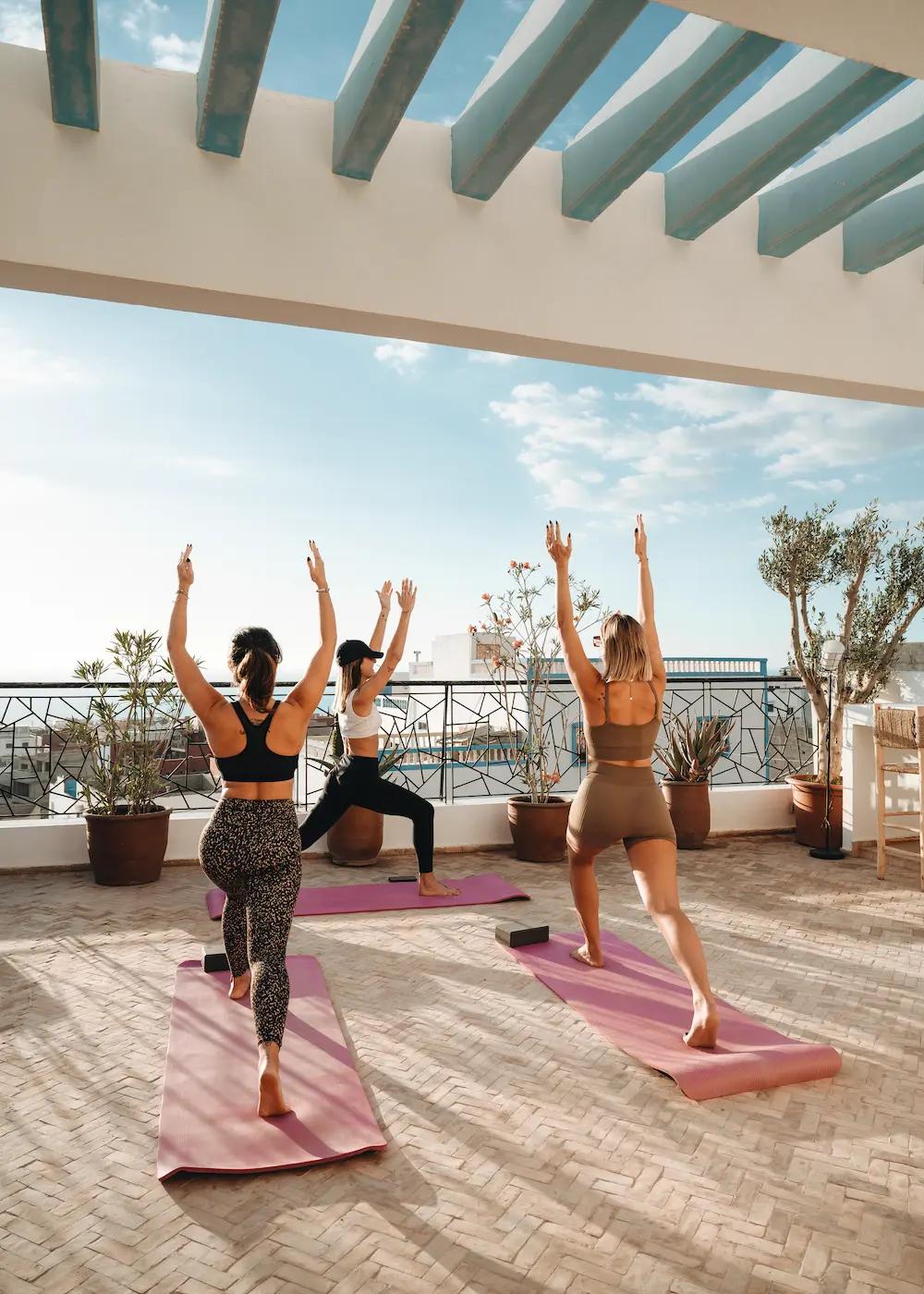
Paddling uses muscles most people never train, and tired arms make every wave harder. Two sessions a day is plenty for a beginner. Drink more water than feels normal, eat properly between sessions, and stretch in the evening. It's one reason we run yoga next to the surf: sore shoulders and tight hips recover faster when you move them.
9. Watch yourself on video
You can't feel what you look like on a board. Watching footage of your own session shows you in thirty seconds what a coach might take a week to explain: a straight back leg, a late pop-up, eyes on the nose of the board. On our Learn to Surf & Vibes week we film from the beach and go through the footage with you once during the week.
10. Pick the right season
In Morocco, spring and autumn bring smaller, friendlier waves and water around 17 to 22°C, which is the sweet spot for learning. Summer is the smallest and warmest season, good for whitewater days. Winter has the biggest swells, but the sandy beaches in the bay still have waves you can learn on. If you want the full picture by month and region, read our guide to the best surf spots in Morocco.

Learn to Surf & Vibes
The fun surf week: good waves, good food, good company. All levels welcome.
From €644
Level Up
The progression week: sharper turns, better wave reading, bigger waves.
From €924The short version
Big board, small waves, sandy beach, and someone who knows the spot. Get those right and your first week is mostly fun. The rest, like reading waves and turning, comes with time in the water.
Frequently asked questions
- How long does it take to learn to surf?
- It varies a lot from person to person. Many beginners stand up in the whitewater during their first sessions. Riding green waves and turning takes longer, usually more than one trip.
- Do I need to be fit to learn to surf?
- You don't need to be an athlete, but you should be comfortable swimming in the sea. Paddling is the hardest part at first, and it gets easier quickly over a week.
- What board should a beginner use?
- A long, high-volume soft-top. It's stable, easy to paddle and forgiving when you fall. Soft-tops come with all our surf packages.
- Is Morocco good for beginner surfers?
- Yes. The sandy beach breaks around Tamraght have slow, forgiving waves most of the year, and the water is warm enough to surf in a wetsuit all year.
- Do I need to bring my own wetsuit?
- No. Wetsuits are provided with our surf packages, matched to your size and the season.