
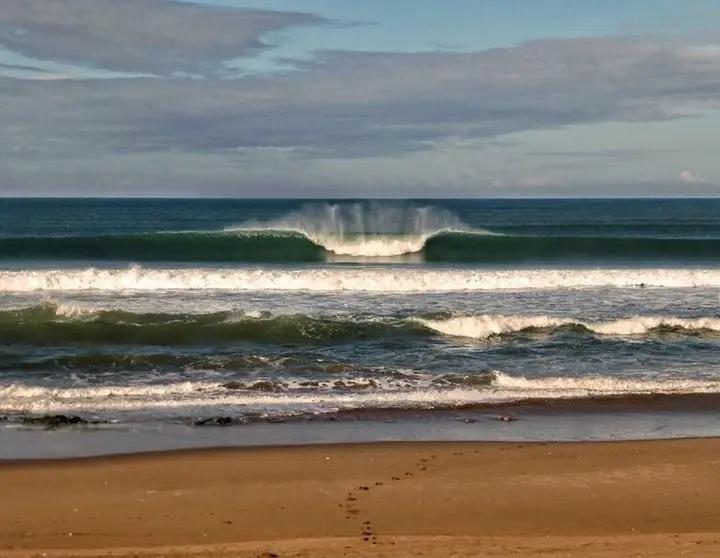
Best Surf Spots in Morocco: A Local Guide by Level
Anchor Point, Imsouane, Safi and the beginner beaches in between: Morocco's surf spots sorted by level, region and season, by the team that picks the break for our guests every morning.
Ask a room of surfers for the best surf spot in Morocco and most of them will say Anchor Point. They're right, if you're an experienced surfer arriving on a clean northwest swell in January. For everyone else it's the wrong answer. The best spot is the one that suits your level on the day you're actually in the water.
This guide goes along the coast region by region, with the level each break suits and the months it works. We run a surf camp in Tamraght, in the middle of Taghazout Bay, and picking the right break for each guest is the first job of every morning. So we'll be straight about which spots are worth the drive and which ones aren't.
The best surf spots in Morocco at a glance
If you only read one section, make it this one. Sorted by the level each wave suits:
- Beginners: Devil's Rock, Banana Beach and Croco Beach around Tamraght, and Imsouane Bay on small days.
- Improvers: Banana Point, Panoramas and Hash Point in Taghazout Bay, and the long right at Imsouane.
- Advanced: Anchor Point, Killer Point and Boilers north of Taghazout, Tamri on big days, and Safi for experts only.
Most of that list sits inside a 25-minute drive of Taghazout Bay, with Imsouane a little over an hour north. That's why the bay is where most surf trips to Morocco end up. Ours included.
Taghazout Bay: where most Moroccan surf trips start
The coast between Agadir and Imsouane catches the North Atlantic swells that arrive from October to April, and its headlands bend them into long right-hand point breaks. In one short drive you have soft sand for a first lesson and some of the best rights in Africa. Here's what's on it, from south to north.
Devil's Rock, Banana Beach and Croco Beach (beginners)
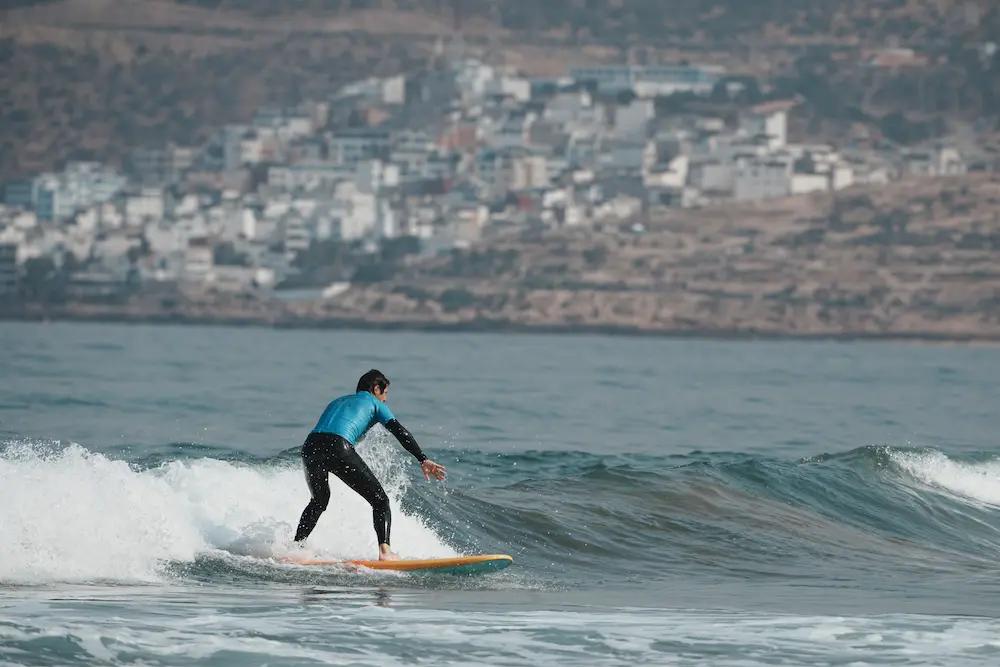
These are the sandy beach breaks around Tamraght and Aourir, and they're where most first-timers stand up. The waves break slowly over sand, there's room to spread out, and when the points up north are too small there's often still something rideable here. We wrote up the breaks on our doorstep in more detail if you're planning a learner trip.
Banana Point (beginners moving on)
A right at the river mouth in Aourir. It's slower and friendlier than the points further north, and it's the usual next step once you're riding green waves instead of whitewater. Longboarders love it.
Hash Point and Panoramas (intermediate)
Hash Point breaks right in front of Taghazout village. It's a shorter right that suits intermediate surfers when the swell is right, and you can check it from half the rooftops in town. Panoramas, a little to the south, gives improving surfers a cleaner wall to practise their turns on.
Anchor Point (advanced)
The wave the region is known for. A long right north of Taghazout that can run for hundreds of metres when a winter northwest swell lines up. You get in over rocks and the line-up gets busy, so it's for experienced surfers. If you're not sure you're ready, you probably aren't yet. That's fine: there are better waves for your level ten minutes away.
Killer Point and Boilers (advanced)
Further north and more exposed than Anchor Point. Killer Point is a powerful right that holds big swell, with a long paddle to the peak. Boilers breaks over reef and is strictly for experienced surfers. Both are worth the trip on the right day and a bad idea on the wrong one.
Tamri (experienced, when the bay is flat)
An open beach break north of Taghazout that picks up more swell than the bay. When everything else is flat, Tamri often has waves. They're powerful, though. Come with some experience.
Imsouane: the long, slow right
A little over an hour north of the bay, Imsouane has one of the longest rides in Morocco. The Bay is a slow, mellow right that can carry you for close to two minutes on the right day, which makes it a dream for longboarders and a confidence boost for improvers. Next to it, the Cathedral is a beach break with more punch.
Imsouane needs the right swell direction, so it's a day trip you plan around the forecast rather than book in advance. When it lines up, we take guests up for the day.
North of Imsouane: Essaouira and Safi
Essaouira is a beautiful old port town, but it's known for wind more than waves, which is why it became a kitesurf and windsurf town. The surf there is often blown out. Sidi Kaouki, to the south, is a more exposed beach break that can be good early in the morning, before the wind picks up.
Safi is a different story. It's a heavy right-hand barrel over reef and one of the most powerful waves in the country. It wakes up on big winter swells and it's for experts only. Most visiting surfers will enjoy it more from the cliff than from the line-up.
Further north: Rabat and Mehdia
The beach breaks around Rabat and Mehdia, near Kenitra, are where Moroccan surfing grew up. Our founder Ilyas was born in Mehdia and started surfing there. These spots are consistent and mostly surfed by locals, but they're city beaches with city crowds, and they're a long way from the point breaks that bring most visitors to Morocco.
Flying into Rabat or Casablanca? They're worth a session. They're rarely worth building a whole surf trip around.
South of Agadir: Mirleft, Sidi Ifni and Dakhla
Head south of Agadir and the coast gets quieter. Mirleft and Sidi Ifni have coves, beach breaks and reefs with far fewer people in the water. One of our coaches, Ayoub, comes from Mirleft. You'll want a car and some time, and the reward is space.
Dakhla sits much further down the Atlantic coast, on a desert peninsula, and most people fly in via Casablanca. It's famous for kitesurfing on its flat lagoon, and there are right-hand points on the ocean side. It's a trip of its own, not a detour.
When to surf in Morocco
The month you pick matters as much as the spot. Here's how the year works on the coast around Taghazout Bay:
- November to March: the main season. Strong north to northwest swells, the points firing, water around 15 to 19°C and a 4/3 wetsuit.
- April to June and September to October: smaller, friendlier waves and water around 17 to 22°C in a 3/2. The sweet spot for learners and improvers.
- July and August: the smallest and windiest months, with warm water. Good for whitewater and first lessons, quiet at the points.
If you're chasing Anchor Point and Killer Point, come in winter. If you're learning, spring and autumn give you more good days in the water.
How to surf several spots in one trip
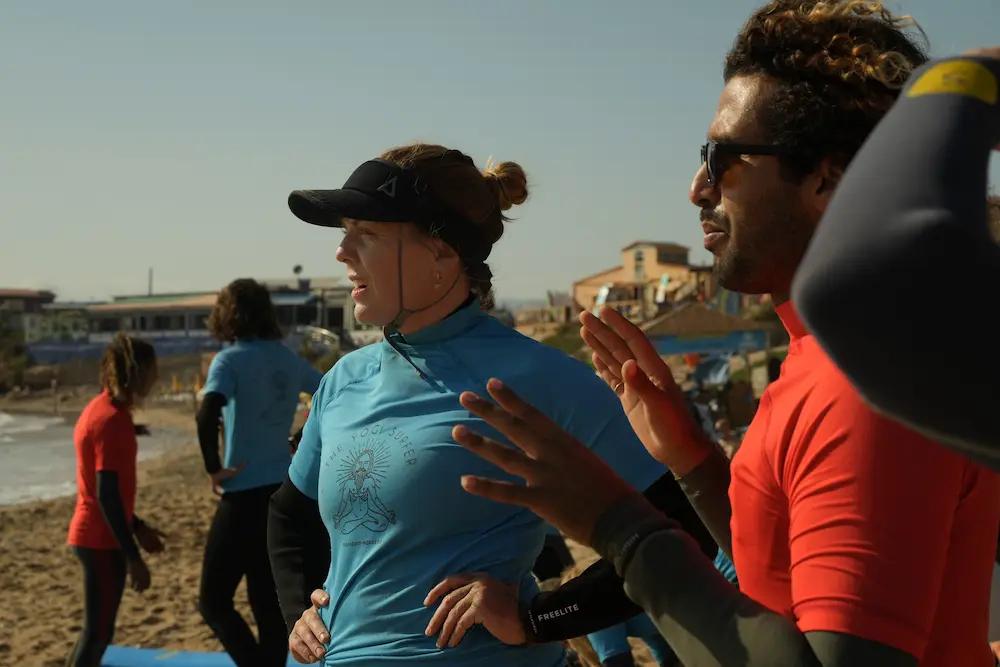
You don't need to travel around the country to surf Morocco's best waves. Base yourself in Taghazout Bay and the right break is a short drive away every day. On our surf packages the daily bus goes to whichever spot suits your level and the conditions. Boards and wetsuits are on site too, so check the equipment we provide before you pay for excess baggage.
Torn between staying in Taghazout or Tamraght? We compared them village against village. Short version: you surf the same coast from both.

Wave Hunter
The surf guiding week: guided, not taught.
From €609
Level Up
The progression week: sharper turns, better wave reading, bigger waves.
From €924
Learn to Surf & Vibes
The fun surf week: good waves, good food, good company. All levels welcome.
From €644The bottom line
The best surf spot in Morocco depends on your level and the month you travel. For most surfers that means a base in Taghazout Bay: beginner beaches, friendly points and some of Africa's best rights within half an hour, with Imsouane in reach when the swell lines up. Save Safi and Dakhla for when you're chasing something specific.
Frequently asked questions
- What is the best surf spot in Morocco?
- Anchor Point, north of Taghazout, is the best-known wave in Morocco and a world-class right for experienced surfers in winter. For beginners and improvers, the beach breaks around Tamraght and the long right at Imsouane are the better choice.
- Where should beginners surf in Morocco?
- On the sandy beach breaks around Tamraght: Devil's Rock, Banana Beach and Croco Beach. Imsouane Bay is also a good choice on small days.
- When is the best time to surf in Morocco?
- October to April for the big point breaks, with November to March the most consistent. Spring and autumn bring smaller, friendlier waves that suit learners, and summer is the smallest and windiest season.
- Do I need a wetsuit to surf in Morocco?
- Yes, all year. A 4/3 in winter, when the water is around 15 to 19°C, and a 3/2 in spring and autumn, when it's around 17 to 22°C.
- Is Taghazout or Imsouane better for surfing?
- Taghazout Bay has more variety, with spots for every level. Imsouane has one of the longest, slowest rights in the country, perfect for longboarding. Stay in the bay and make Imsouane a day trip to get both.